
The best way to clean a trash can
The short answer: near-boiling water at high pressure, then a can that's dried out instead of left wet. Here's how to get close to that with what you have at home, what to do about smells and maggots, and when it's easier to hand the job off.
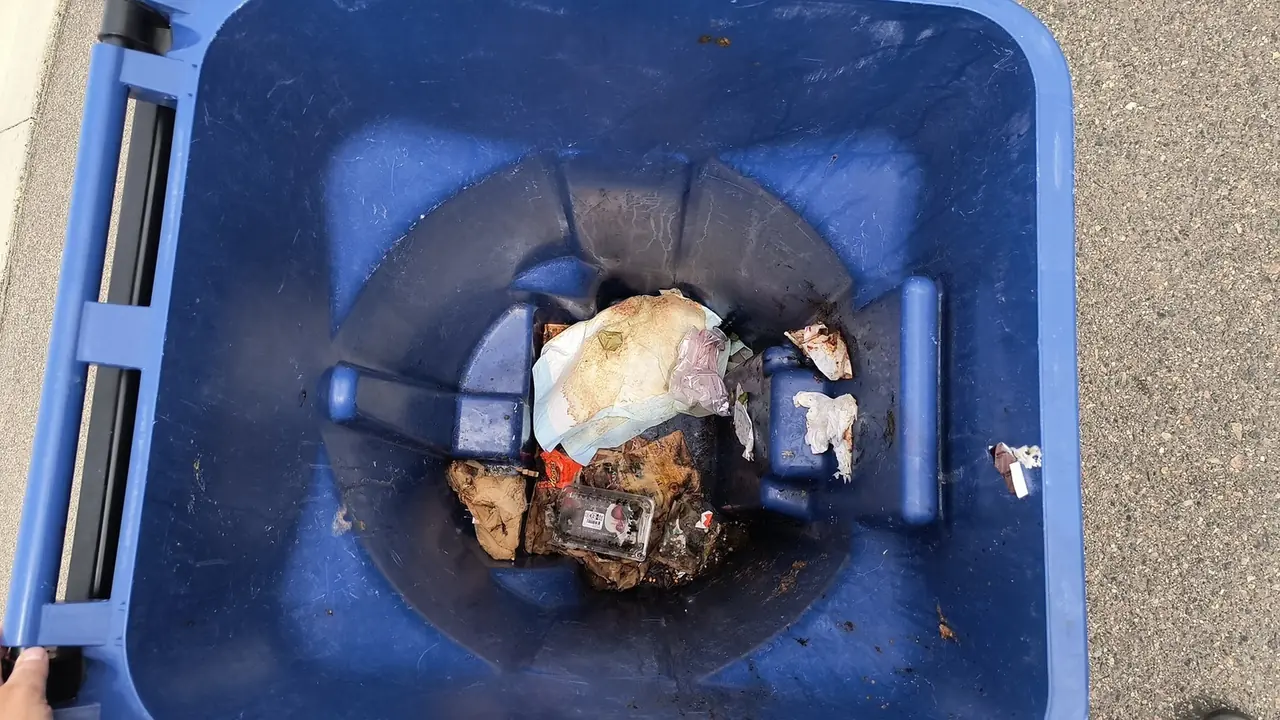
What you need
- A hose with a spray nozzle, or a pressure washer if you have one
- A bucket of the hottest water your tap will give you
- Dish soap, or white vinegar mixed half and half with water
- A long-handled scrub brush
- Rubber gloves, eye protection and an old towel
Step by step
- Do it on trash day. Wash the can right after the truck empties it. You'll never get an emptier can.
- Pick your spot. Use the lawn or gravel, away from the curb. In Longmont, Firestone and Broomfield, the storm drains run to the creeks with no treatment, so whatever goes down the gutter ends up in the water.
- Knock out what's stuck. Tip the can on its side and scrape loose anything on the bottom. Bag it and throw it out.
- Hot water first. Pour in the bucket of hot soapy water and let it sit for a few minutes. Hot water softens grease that cold hose water just pushes around.
- Scrub the bottom and corners. Then the inside of the lid. That's where the smell comes from.
- Rinse and do the outside. Spray the inside from the top down, then the lid, handle and wheels, which are the parts you touch every week.
- Dry it. Wipe out the standing water with an old towel and leave the can upside down in the sun. A can that stays wet will smell again in a few days.
Getting rid of the smell
Most of the smell is food residue, so a can that's scrubbed and fully dry is most of the way there. A sprinkle of baking soda in the bottom of the dry can helps with what's left.
To disinfect, spray the clean can with a disinfectant made for hard surfaces and leave it wet as long as the label says before you rinse. If you use bleach, dilute it the way the bottle says and never mix it with vinegar, ammonia or other cleaners.
Maggots and flies
Maggots come from flies laying eggs on food left in the can. If you already have them, empty the can and carefully pour boiling water over them, then clean and dry the can the way it's laid out above.
To keep them away, bag your food scraps and tie the bags shut, keep meat scraps in the freezer until trash day, and keep the lid closed. The compost can is usually where they show up first, especially in July and August.
In winter
Pick a warm afternoon. Water left in a can on a freezing night turns to ice in the bottom, and a frozen-in mess is harder to get out than a dirty one. Our own season runs March through December 24 for the same reason.
Where a hose falls short
Hose water is cold and low pressure, and it moves grease around more than it removes it. You also end up leaning into the can with a brush, wearing whatever splashes back. A power washer helps with pressure, but not with heat. One customer put it this way in a Google review: "I had cleaned them out before with a power washer but they still stunk."
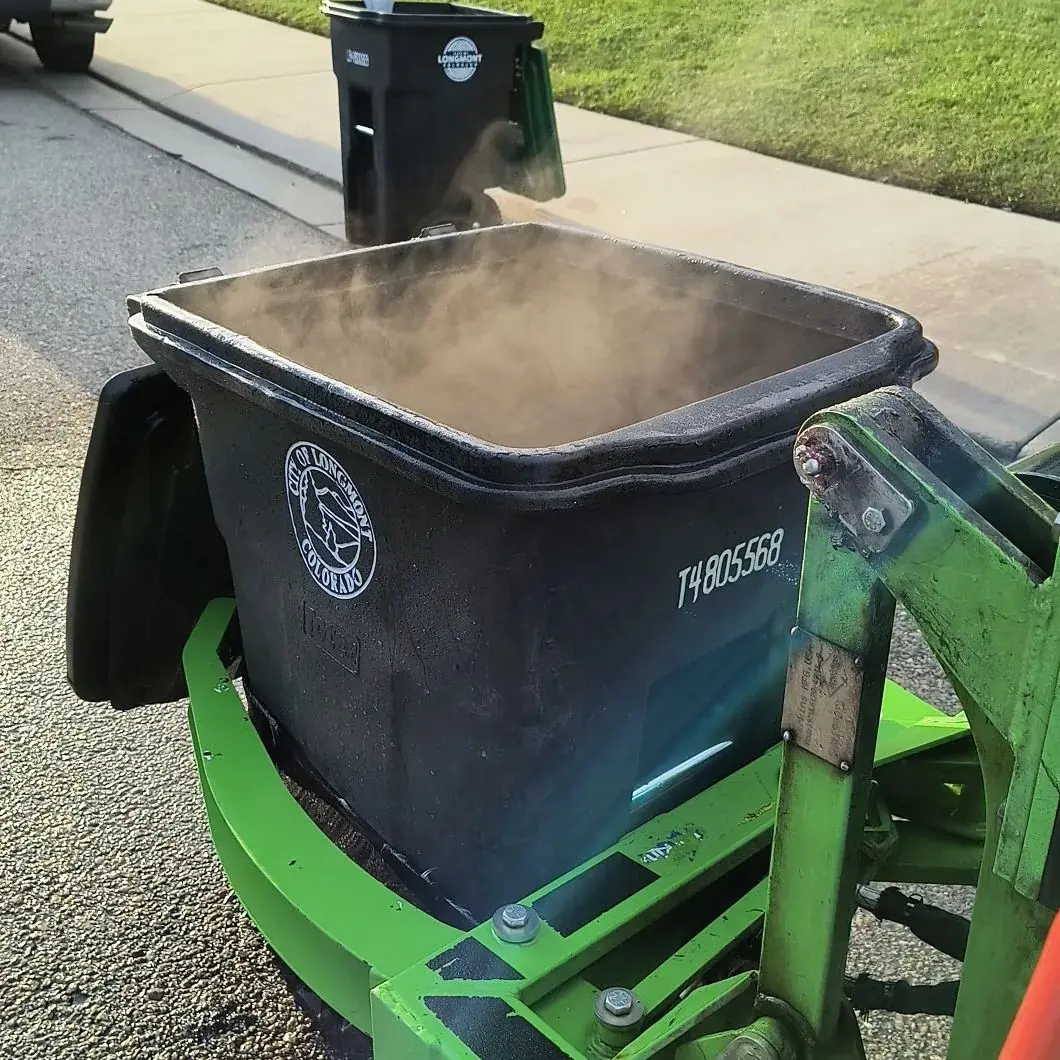
That's the job our trailer was built for. The can goes up on a lift and over a spray head, high-pressure water up to 200°F does the scrubbing, and we finish with a fresh towel and a deodorizer. The dirty water stays in the trailer instead of running down the street.
Or skip the scrubbing
We clean trash, recycling and compost cans in Longmont, Erie, Broomfield, Gunbarrel and Carbon Valley from $19 a cleaning. We come the day after trash day, and you don't need to be home.